




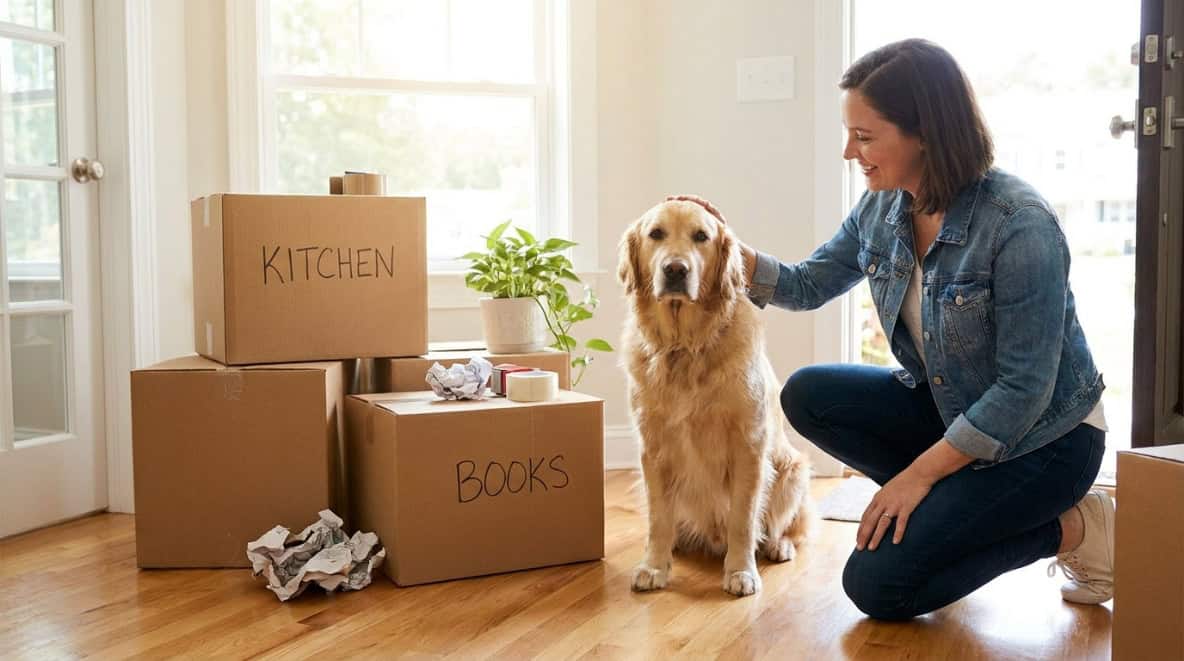
Pets do not understand what is happening on moving day. From their perspective, unfamiliar people are handling their belongings, the routines that structure their day are disrupted, and the home they know is being dismantled around them. That stress is real for animals, and managing it alongside the logistics of a move takes some planning.
Here is what to prepare for before, during, and after a move with pets in Arizona.
The Weeks Before the Move
The best thing you can do for a pet before a move is to maintain the routine for as long as possible. Walk dogs at the same time. Feed cats in the same places. Avoid rearranging their spaces or removing their bedding and toys until you have to.
If your pet is particularly anxious, speak with your veterinarian a few weeks before the move. Anti-anxiety medications and calming supplements work best when introduced before the stressful event rather than on the day of. Your vet can also advise on the specific needs of your animal, including any travel restrictions for breeds prone to heat stress in Arizona’s climate.
Begin leaving moving boxes around the home early. Pets, especially cats, often habituate to new objects faster when they are introduced gradually rather than appearing all at once on moving day.
Preparing on Moving Day
The safest option for most pets on moving day is to have them away from the home entirely. A friend’s house, a daycare facility, or a boarding option removes pets from the noise and disruption while also eliminating the risk of them escaping through open doors.
If having pets away is not possible, designate a single room that will be packed last and emptied last. Put their bed, food, water, and familiar items in that room and keep the door closed with a note on it so the moving crew knows not to open it.
Never leave pets in a car on a hot Arizona day, even for a short period. Summer temperatures in Arizona can make an enclosed vehicle lethal for animals within minutes.
The Drive to the New Home
Secure pets in appropriate carriers or restraints for the drive. Cats travel most safely in hard-sided carriers. Dogs should be secured either in a crate or with a vehicle harness. Loose pets in a vehicle create safety risks and add stress to an already busy day.
Keep the vehicle cool throughout the drive. If you are stopping for any reason, do not leave pets in a parked car. Plan your route with pet-friendly stops in mind for longer drives.
Bring water and a portable bowl. Offer water regularly, particularly in summer. Do not feed pets a full meal immediately before travel as many animals experience motion sickness.
For interstate moves, research pet-specific entry requirements for your destination state. Some states have documentation requirements for certain animals crossing state lines.
Settling Into the New Home
When you arrive, set up one room for your pet before opening the rest of the new home. A familiar bed, toys, food, and water in a quiet space gives them a base to adjust from rather than being overwhelmed by the entire new environment at once.
Cats typically take longer to adjust than dogs. Keep cats indoors for at least two to three weeks after the move before allowing outdoor access. This prevents them from attempting to return to the previous address, which cats have been known to do after a move.
Dogs benefit from early exploration of the new neighborhood on a leash. Establishing familiar walking routes quickly helps them understand that this new place is home.
Updating Pet Records After the Move
Update your pet’s microchip registration with your new address as soon as possible after the move. Update your veterinarian records, or establish a new vet if you have moved to a different area. Make sure ID tags reflect current contact information.
If you are moving within the Phoenix metro, your existing vet may be within a reasonable distance. For moves to the outer suburbs or a new part of the Valley, identifying a new veterinary practice in advance avoids a scramble if your pet needs care shortly after the move.
Pets pick up on their owners’ stress, and moving day is inherently stressful. Keeping calm, maintaining routine where you can, and planning for your pet’s specific needs makes the transition smoother for everyone in the household.